
Net Zero Neighbourhood
Equans is working in partnership with the West Midlands Combined Authority (WMCA) to deliver the UK’s first Net Zero Neighbourhood (NZN) in Dudley - a pioneering, place-based model integrating housing, transport, energy and green spaces. Community-led and finance-enabled, it offers a replicable blueprint for sustainable regeneration in areas facing social and environmental challenges.Net Zero Neighbourhood
Equans is working in partnership with the West Midlands Combined Authority (WMCA) to deliver the UK’s first Net Zero Neighbourhood (NZN) in Dudley - a pioneering, place-based model integrating housing, transport, energy and green spaces. Community-led and finance-enabled, it offers a replicable blueprint for sustainable regeneration in areas facing social and environmental challenges.
Key numbers
Key numbers
Overview
Brockmoor, Dudley was selected due to its high levels of fuel poverty, low employment, and mixed housing tenure. The WMCA’s goal is to demonstrate the replicability of the NZN model to help meet the Combined Authority’s 2041 net zero target, decarbonising housing, transport, energy infrastructure and regenerating green space and building community cohesion. However, funding constraints, limited market capacity, and the complexity of whole-place decarbonisation required an innovative, partnership-led approach
Our work
Equans is leading a consortium (with Keele University, Connected Places Catapult), working with Dudley MBC and the WMCA to deliver the UK’s first Net Zero Neighbourhood - a place-based decarbonisation project taking a whole system holistic approach grounded in community co-design and designed around four core pillars:
- System optimisation: Retrofitting homes based on what is appropriate for them; this includes fabric improvements, electrification of heat, installation of renewable generation and flexible assets, green space regeneration, transport, and infrastructure
- Community co-design: Education programmes, workshops, and shared ownership to improve engagement and increase intervention uptake through their participation in co-designing NZN interventions
- Blended funding: Combined use of SHDF, private finance, stakeholder capital and grants to unlock delivery at scale
- Legal and commercial innovation: Delivered via flexible frameworks, bespoke structured contracts, and a logic model that supports outcome-based funding, opening new revenue streams and driving long-term, place-wide impact.
Impact
The programme has delivered meaningful environmental, social, and economic benefits across the neighbourhood. By upgrading homes and commercial buildings, it has reduced energy demand, lowered resident and business bills, and cut carbon emissions.
Alongside this, transport design improvements - shaped through local consultation - have created cleaner, safer, and more accessible networks.
Crucially, the community’s active role in co‑designing interventions has strengthened social cohesion and ensured solutions genuinely meet local needs. The development of a robust logic model has expanded the evidence base around wider outcomes and co‑benefits, supporting clearer alignment between actions and measurable impacts.
This model now provides a replicable framework, enabling other neighbourhoods across the West Midlands and beyond to adopt a proven, community‑centred approach to place‑based transformation.
Key Statistics
- £1.65 million in capital funding secured from the West Midlands Combined Authority to launch Phase One of the UK’s first Net Zero Neighbourhood
- Aiming for up to 300 homes (a mix of privately owned and social housing) to undergo retrofit measures, including advanced insulation, solar panels, battery storage, and low-carbon heating systems (50 homes have been refitted in phase 1)
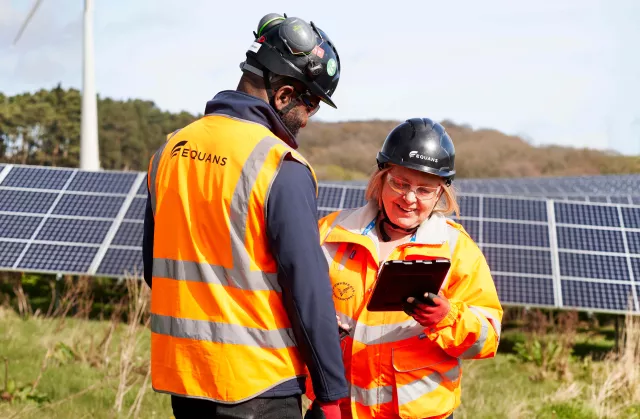
- Equans has installed 73.8kWp of solar (domestic and commercial), with 172kWh of battery storage (domestic and commercial), improving security of supply and lowering electricity costs for households and businesses.
Our expertise
Equans supports businesses, communities and the public sector by mobilising its expertise to provide low-carbon energy solutions, offer cutting-edge technical and FM services and transformative regeneration across the UK & Ireland.