Accelerating NHS decarbonisation: harnessing innovation and funding to transform healthcare estates
The NHS stands at a pivotal crossroads in delivering sustainable, resilient healthcare environments that meet today’s clinical demands while aggressively reducing carbon emissions.
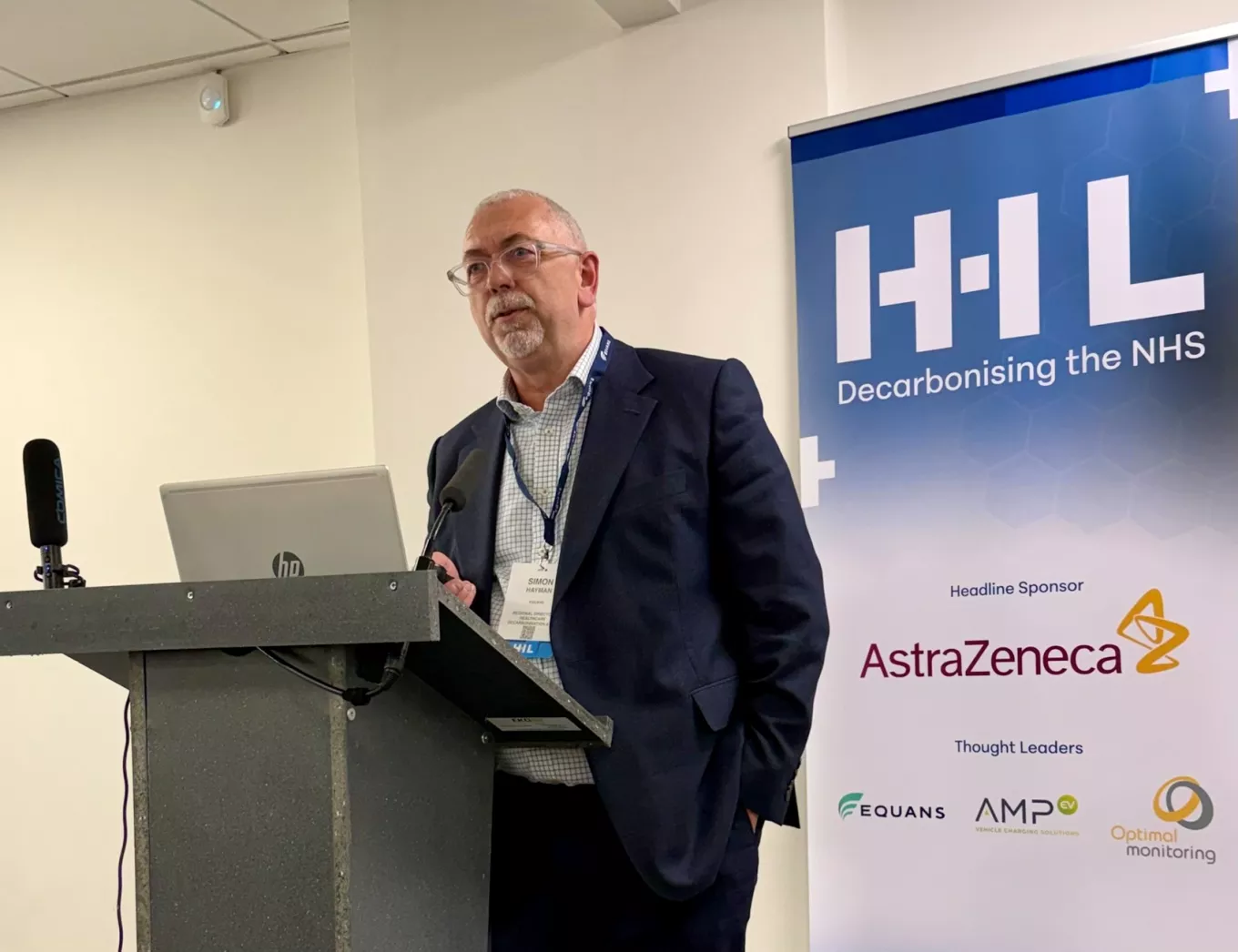
At the recent HIL Decarbonising the NHS event, our Regional Director, Simon Hayman showcased how strategic funding, cutting-edge technology, and holistic digital transformation can unlock the full potential of NHS estates in this crucial transition.
Aligning with NHS carbon reduction targets
With NHS England committed to reducing Scope 1 and 2 greenhouse gas emissions by nearly 50% by 2032, and Scotland charting ambitious parallel goals, decarbonisation is no longer optional - it’s imperative. Across NHS hospital sites, innovation in energy management and estate resilience is already reshaping care delivery.
Unlocking capital through innovative funding mechanisms
Key schemes such as the GB Energy and NHS solar and battery initiatives, alongside the Scottish Public Sector Energy Efficiency Loan Scheme and NHS Estates Safety Fund, represent vital capital enablers. These funding streams empower NHS trusts to accelerate transition projects like solar PV and battery storage integration, low-carbon heat networks, and pioneering electrification efforts.
However, challenges remain in aligning capital department expenditure limits with emerging needs, particularly for legacy hospitals locked into complex PFI/PPP contracts, highlighting the need for flexible financial frameworks and advanced business case development.
Smart, integrated energy solutions
Equans highlighted practical, scalable interventions including:
- Solar PV combined with battery storage on hospital roofs and car parks, tackling energy supply volatility and optimizing costs.
- Deployment of microgrids and private wire solutions to create localised zero-carbon energy hubs, as exemplified by the Babraham Road Smart Energy Grid, which supplies an NHS hospital in its locality with renewable energy through a 2km private wire connection.
- Expansion of low-carbon heat networks, supported by the Green Heat Network Fund and Heat Network Efficiency Scheme, reducing reliance on fossil-fuel heating systems while addressing operational expenditure through smart load management.
Electrification: a new hospital era
Groundbreaking projects like the electrification of Pontefract Hospital and Pinderfields Hospital’s pathology building demonstrate commitment to all-electric, decarbonised estates. Design and contract preparations are underway to fully realise government-backed grant schemes transforming conventional energy infrastructures.
Optimisation through digitalisation and seasonal commissioning
Simon stressed the value of ongoing seasonal commissioning and optimisation to deliver immediate energy reductions, including ventilation adjustments, LED lighting and controls, and balancing of CHP systems. Notably, CHPQA certification offers fiscal benefits through climate levies exemptions, reinforcing the economic case for quality CHP schemes. Digital maturity assessments and smart hospital KPIs around energy efficiency, carbon reduction, and space utilisation form the backbone of larger estate-wide digital transformation strategies.

Climate adaptation: building resilience into healthcare estates
With extreme weather events growing in frequency and severity, NHS trusts must embed climate adaptation into estate planning. Advanced climate risk modelling and stringent building assessments, as demonstrated in the Leeds Teaching Hospitals NHS Trust case, provide bespoke mitigation strategies safeguarding patient comfort and safety.
The road ahead: integrated decarbonisation and digital innovation
Equans advocates for an overarching, data-driven digital strategy interwoven with decarbonisation and climate resilient aims. Measuring holistic KPIs - from patient experience to nursing productivity and energy consumption - enables Trusts to monitor progress transparently while refining operational workflows.
The scale of transformation demanded by NHS decarbonisation is immense but achievable with concerted collaboration between healthcare leaders, technical partners, and government bodies. Embracing innovation, unlocking diverse funding mechanisms, and embedding sustainability into every level of healthcare estate management will empower the NHS to deliver superior patient care while meeting its critical environmental commitments.