Insight Insight 2026-09-22
Tackling the UK’s green skills challenge by making careers visible
After taking part in Business Green’s webinar ‘Spotlight on Skills: How to build the green workforce for 2030’ – Matt Bloice, Head of Resourcing at Equans UK & Ireland, reflects on addressing the challenges of building green skills in the UK’s workforce.
The UK's green skills debate often starts with a question about shortages - do we have enough people to deliver the transition to net zero, including electricians, engineers, and retrofit specialists?
These are important questions, but I believe we're framing the challenge too narrowly. The reality is that the transition to a low-carbon economy is not primarily a jobs challenge: it's a workforce transformation challenge.
Many of the skills we need already exist across construction, facilities management, engineering, operations and professional services. The challenge is how we reskill, retrain and attract people into roles that are changing rapidly.
Green skills are becoming core business skills across the UK workforce
One of the misconceptions that persists is that green skills belong to a specialist group of sustainability professionals.
In reality, sustainability is becoming embedded in almost every role: whether that’s an electrician installing smart building controls, a project manager delivering an energy efficiency programme, a data analyst measuring carbon performance, or a procurement professional helping to build more sustainable supply chains.
These aren't "green jobs" in the traditional sense, but they're examples of how sustainability is increasingly becoming part of everyday work.
Much like current industry conversations around AI, where companies are equipping their existing workforce with new capabilities, businesses need to treat green skills as core business skills rather than something separate from workforce planning.
Retrofit and the built environment face significant green skills challenges
One of the most significant ‘green skills’ workforce challenges sits within the built environment. Across the UK, our building stock needs to become more efficient, resilient and lower carbon. We can't simply start again; we have to retrofit what already exists. This infrastructure was never designed for today's climate realities, making retrofit one of the most urgent skills requirements facing the sector.
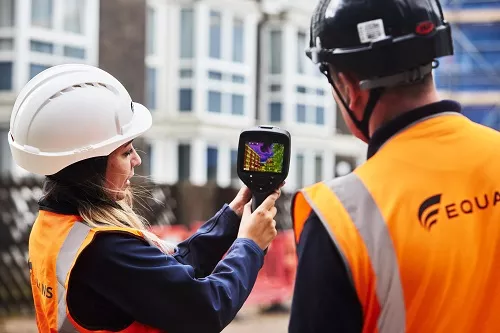
At Equans, we're seeing growing demand for skills linked to building retrofit and electrification, including installation of low carbon heating and energy efficiency technologies, solar PV and EV infrastructure.
There are plenty of opportunities within these green skills sectors, but the UK needs a workforce capable of delivering them at scale.
Employers need to build green skills, not simply compete for existing talent
A major risk facing the sector today is the tendency for organisations to ‘buy’ skills by hiring from competitors rather than creating them themselves. This competition for the same limited talent pool inflates costs without growing the overall number of skilled workers – an unsustainable approach for the scale of transformation required.
The long-term answer is to invest in apprenticeships, development pathways and reskilling programmes. At Equans we employ over 500 apprentices, and last year we spent around £4m on training & upskilling across more than 1300 development programmes – and while we don’t pretend to have all the answers, an industry-wide mindset shift is important to get the UK’s transition to where it needs to be.
Industry efforts on training also need to be supported by clear and consistent policy. Long-term policy certainty gives businesses the confidence to invest in apprenticeships, skills and workforce development, particularly where that investment can take years to pay back.
Developing the people already within our industries is only part of the solution – we also need to attract the next generation.
Making green careers visible to the next generation
There is another issue that receives less attention than it deserves: many young people simply don't understand what these careers are. When we talk about "green skills" or the "built environment", those terms often mean very little to somebody making career decisions. At the same time, our industries are experiencing an ageing workforce with experienced colleagues retiring.
As employers, we need to do a much better job of explaining what these careers involve to young people, why they matter and the impact they have on society. It’s a challenge to translate complex sectors into something that younger generations can connect with and find exciting.
The reality is that the built environment touches every aspect of our daily lives. It is the hospitals that care for us, the schools that educate future generations, and the workplaces, transport infrastructure and public buildings that communities rely on every day. Helping those assets run safely, efficiently and sustainably is meaningful work with a tangible impact on people's lives.
If we're serious about closing future skills gaps, we must also ensure we're attracting talent from the widest possible pool. The industries responsible for delivering the transition need to become more representative of the communities they serve and create opportunities for people from a broader range of backgrounds. A sustainable workforce is also an inclusive workforce.
This challenge is exactly why Equans launched our Future Jobs campaign - created to help young people understand the careers shaping the future of the built environment and the role they can play in delivering net zero. Recognising how rapidly the world of work is changing, the campaign uses playful and imaginative job titles to underscore the pace of change driving the UK’s transformation towards a more sustainable, digitalised and decarbonised future.
Developing people and career pathways will underpin the net zero transition
While technology, investment and policy matter - the transition to a decarbonised economy is ultimately a people challenge, and the organisations that succeed will be those that create meaningful career pathways, embrace transferable skills and inspire the next generation to join them.
If we want to close the green skills gap, I think the most important thing we can do is help people see themselves in the careers that will shape our future.