
Glossary Glossary 2026-07-31
What is IoT in facilities management?
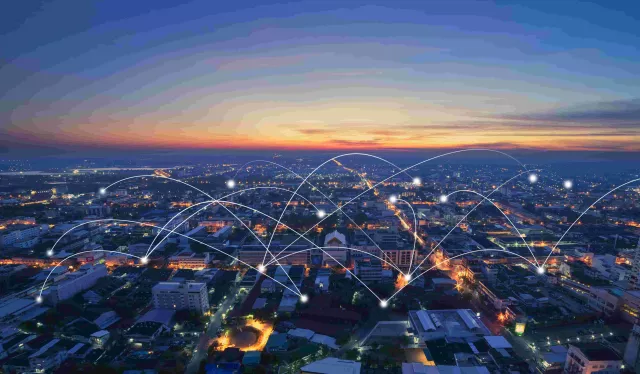
IoT (Internet of Things) in facilities management (FM) refers to the use of connected sensors and devices to monitor building performance and conditions in real time.
These devices collect data that can be used to improve efficiency, maintenance, and user experience.
Why IoT matters in FM
IoT enables organisations to:
- Monitor assets continuously
- Detect faults before they become failures
- Optimise energy use
- Improve space utilisation
- Enhance occupant comfort
For organisations with large estates, net zero is not just a sustainability goal - it’s a strategic operational priority.
How IoT works in buildings
IoT systems typically include:
- Sensors (temperature, occupancy, air quality, energy use)
- Connectivity (networks linking devices)
- Data platforms for analysis and insights
- Integration with systems like BMS.
IoT in practice
IoT is increasingly used across:
- Commercial offices
- Healthcare facilities
- Education estates
- Public sector buildings
Common use cases
- Predictive maintenance of equipment
- Real-time energy monitoring
- Occupancy-based space management
- Environmental monitoring (air quality, humidity)





Frequently asked questions
IoT stands for Internet of Things.
In facilities management, IoT means using connected devices, sensors and systems to collect real-time data from buildings and assets, helping teams make more informed decisions.
IoT can connect with a building management system, or BMS, by feeding real-time data into the systems used to monitor and control building services.
This can help improve control of heating, ventilation, air conditioning, lighting and other building systems.
IoT can improve energy efficiency by monitoring energy use in real time and identifying where energy is being wasted.
For example, IoT data can help optimise heating, cooling, lighting and equipment use based on occupancy, demand and building conditions.
Yes. IoT can help reduce maintenance costs by identifying faults earlier and supporting more targeted maintenance.
By using real-time data, facilities teams can avoid unnecessary checks, reduce emergency repairs and plan work around actual asset condition and performance.
IoT can help manage public sector buildings by improving visibility of energy use, asset performance, occupancy and environmental conditions.
This can support better maintenance planning, energy efficiency, compliance, comfort and long-term estate management.
The main benefit of IoT in facilities management is that it provides real-time data to support better building decisions.
This helps organisations improve efficiency, move towards predictive maintenance, optimise energy use and create better environments for building users.